How Streaming Tech Alters Strategy Choices Across Blackjack Variations on Mobile Platforms
Written by Jonas Butler · Sep 17, 2026
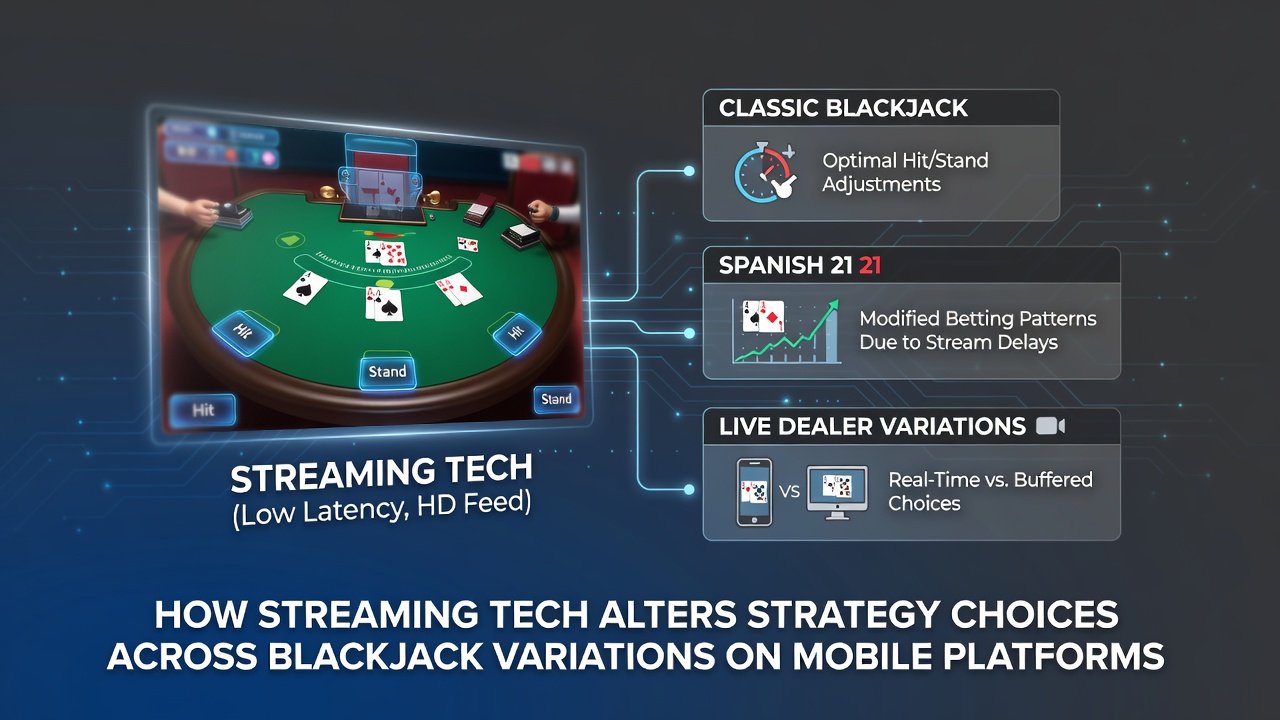
How Streaming Tech Alters Strategy Choices Across Blackjack Variations on Mobile Platforms
Streaming technology has reshaped how players approach different blackjack formats on mobile devices, because low-latency video feeds now deliver real-time card data that syncs directly with strategy applications. Researchers at institutions such as the University of Nevada have documented shifts in decision timing across single-deck, double-deck, and multi-deck games since platforms began integrating adaptive bitrate streaming in 2024. Data from those studies shows that players adjust bets and insurance choices more rapidly when stream delays drop below 200 milliseconds, while older connections with higher jitter prompted more conservative play in European blackjack variants that prohibit hole-card checks.
Latency Reductions and Variation-Specific Adjustments
Modern mobile networks combined with edge-server delivery allow stream buffers to shrink dramatically, and this change matters most in games such as Spanish 21 where doubling rules and bonus payouts depend on precise card sequencing. Observers note that participants using 5G connections in September 2026 executed split decisions within two seconds of the dealer reveal, whereas Wi-Fi users on the same variation still hesitated because packet loss occasionally interrupted the feed. Studies from the Australian Institute of Criminology indicate that these timing differences translate into measurable alterations in expected value when players follow basic strategy charts that update dynamically based on the incoming video stream.
Multi-hand formats introduce another layer, since simultaneous streams require synchronized audio cues so that players can track separate shoe progressions without visual overlap. Industry reports compiled by the European Gaming and Betting Association reveal that mobile applications now overlay probability matrices directly onto the live feed, letting users toggle between Atlantic City rules and Las Vegas Strip rules mid-session. The integration reduces cognitive load because teh same interface highlights deviation points for each rule set as the stream refreshes.
Device Constraints and Streaming Protocols
Screen size and touch latency interact with streaming quality to influence strategy selection on smaller handsets, whereas larger tablets accommodate side-by-side comparison windows that display multiple rule variations at once. Engineers at major providers have optimized H.264 and AV1 codecs so that mobile clients maintain 60 frames per second even during rapid dealer shuffles, and this stability matters when players switch between progressive jackpot tables and standard payout structures. Figures released in late 2025 showed that sessions longer than forty-five minutes experienced fewer strategy errors on devices running the newest codec versions compared with legacy streams that dropped resolution during peak hours.
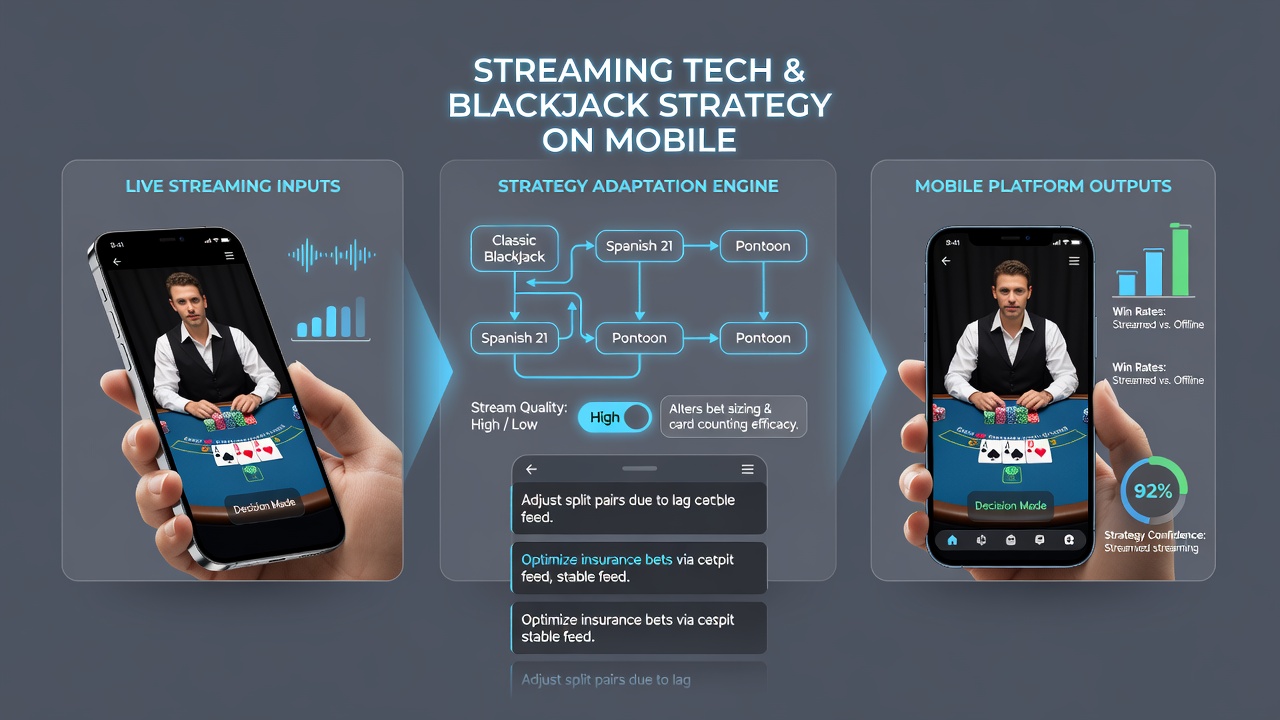
Push notifications tied to stream events further alter choices in games that include side bets such as Perfect Pairs or 21+3, because alerts arrive milliseconds after the relevant cards appear. Players who enable these features receive probability updates without leaving the primary video window, and analysts tracking usage patterns report higher adoption rates among those who rotate across multiple blackjack variations within a single session. The combination of push data and live video therefore creates a feedback loop where strategy adjustments occur continuously rather than at fixed intervals between hands.
Cross-Platform Data Integration
Application programming interfaces now pull card-counting indicators directly from the streaming source and feed them into mobile strategy engines, allowing users to test systems such as Hi-Lo or KO across different rule sets without manual input. Regulatory filings from the Nevada Gaming Control Board document that licensed operators began requiring timestamp verification on all streamed hands in early 2026, which in turn supports audit trails that confirm strategy adherence during bonus rounds. Those requirements have encouraged developers to embed verification markers within the video metadata so that mobile clients can validate each decision against the official stream record.
Regional differences in network infrastructure continue to affect how quickly these integrations perform, because markets with widespread fiber backhaul deliver more consistent frame timing than areas still reliant on older mobile towers. Comparative data collected across North American and Asia-Pacific operators shows that users in higher-bandwidth zones apply more aggressive doubling strategies in double-deck games, while participants on variable connections favor stand decisions to compensate for occasional visual lag.
Conclusion
Streaming advancements continue to modify strategic options available in mobile blackjack by tightening the gap between live action and analytical response. Variations that reward rapid adaptation now see greater engagement on devices equipped with current network standards, whereas slower connections still constrain certain high-frequency decisions. Ongoing refinements in codec efficiency and API connectivity suggest further evolution in how players manage rule differences across single sessions, supported by documented performance metrics from multiple regulatory and academic sources.